EuRuKo 2026

Two days of Ruby & lots of new ideas
Recap EuRoKo 2026
In mid-September, EuRuKo, one of the most important events in the Ruby calendar, returned. Paul, Roland, Christoph and Richard were on site in Brno, Czech Republic, on 17 and 18 September. They returned with new technical approaches, insights from numerous conversations and ideas to consider and experiment with.
EuRuKo has always been a special event, organised by the community and held in a different European city each year, featuring a notably open exchange of ideas. This year, the focus was largely on performance and Ruby internals, as well as the impact of AI on software development.
Opening keynote by Matz
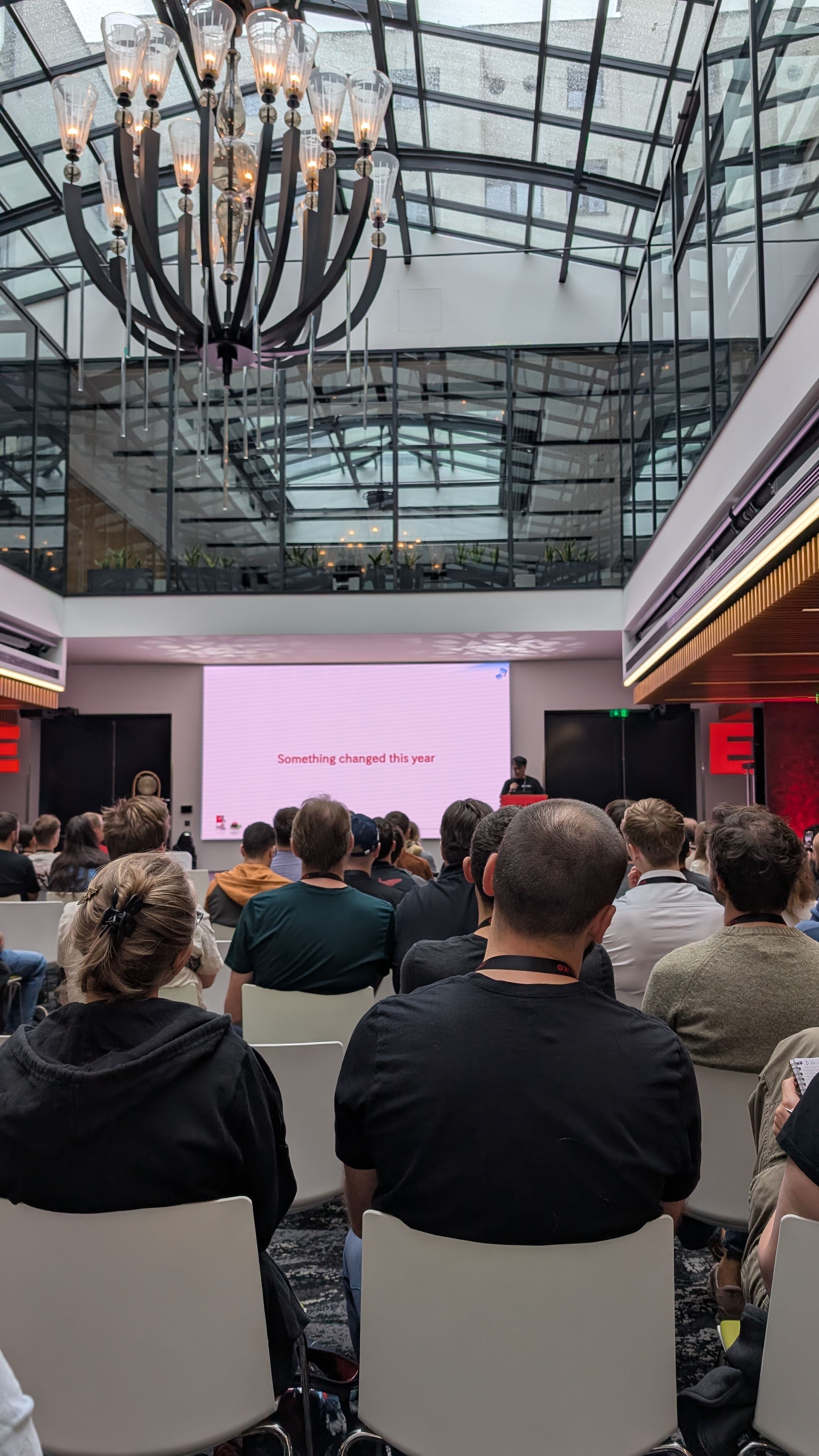
Yukihiro 'Matz' Matsumoto, the creator of Ruby, opened the conference by posing a fundamental question: what is the purpose of a programming language designed for humans when more and more code is being generated with the help of AI? According to Matz, the way code is developed has changed fundamentally since last year.
His answer: Ruby still has its place in the age of AI. The language requires comparatively little code for many tasks. When AI writes Ruby code, fewer tokens are used as a result. This saves time and costs during the development process, as Matz demonstrated by comparing Ruby with other programming languages. However, Matz sees potential in terms of execution speed. Given that computing power is becoming increasingly expensive, it is worth making Ruby applications even more efficient.
Matz offers a potential solution in the form of Spinel, an AOT compiler. Put simply, it translates Ruby code into a form that can be executed more quickly before the code is actually run. However, Spinel is not yet suitable for complete Rails applications. Nevertheless, an initial experiment with the Campfire chat application demonstrated the significant performance boost and resource savings that can be achieved. Spinel is therefore not yet on the agenda for our projects, but it is a promising development.
It was also fascinating to get a behind-the-scenes glimpse: Spinel is developed entirely through 'vibe coding'. Matz merely sets the guidelines and makes major architectural decisions. The AI writes the code at an impressive pace. However, this approach is not suitable for our client projects. For an experimental project, though, it is acceptable for the developer not to understand every detail of the code. However, applications that run reliably and securely for years and are maintained by different developers pose different challenges. Code that is difficult to understand, unnoticed security vulnerabilities, and growing technical debt carry significantly greater weight in this context. We therefore use AI specifically as a support tool. Our developers remain responsible for the code.
1,000 changes a day at GitHub
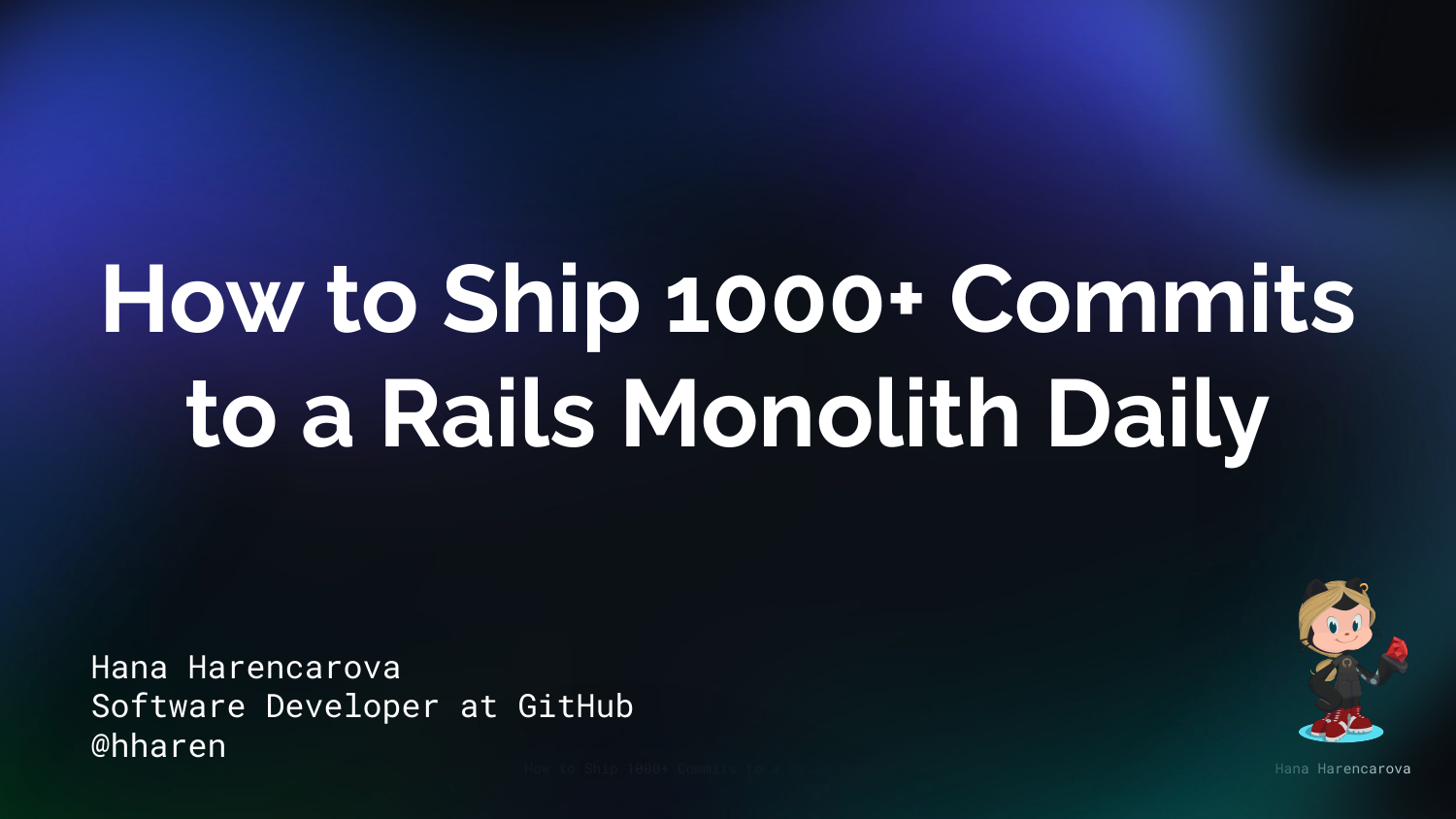
Hana Harencarova, a senior software engineer at GitHub, demonstrated how more than 1,000 changes are deployed daily to a large Rails application at GitHub. This is achieved by breaking major features down into small changes and releasing them continuously. Feature flags ensure that new functions can be rolled out technically while remaining hidden from users until they have been fully implemented and tested. Automated checks before every deployment and a structured, step-by-step merging of changes ensure that everything runs smoothly despite the fast pace.
GitHub operates one of the world's largest Rails applications, setting it apart from the rest. Even our largest projects do not reach that scale. Nevertheless, we are interested in this approach, as we have already considered and discussed how lengthy release processes involving many bundled changes might be streamlined. The talk provided valuable insights in this regard: smaller, more frequent releases make each individual change more manageable and thus reduce the risk. For our customers, this means that in the best case new features and bug fixes will reach them more quickly, rather than them having to wait for the next major release.
RubyLLM 2.0: AI in operational use
Carmine Paolino, founder and CEO of Chat with Work, demonstrated how AI features can be integrated directly into Ruby and Rails applications using RubyLLM 2.0. He had previously presented the library at EuRuKo 2025. The library provides a common interface to 17 AI providers, allowing users to switch between models or providers — including between cloud-based and locally run models — without having to rewrite the entire application logic. Just one line of code is needed to start a chat.
Especially fascinating was the insight into its use in production environments. Once AI features are running continuously within applications, factors such as cost, reliability, and traceability become crucial. RubyLLM 2.0 addresses these issues by utilising caching and batch processing, providing alternative models in the event of provider failure and offering source attribution for responses, as well as improved tracking of complex AI workflows. It is also easier to integrate new or smaller providers. From our perspective, RubyLLM is particularly interesting in terms of future AI functions in client projects: a unified interface keeps applications independent of individual providers, and features such as fallbacks and source citations make AI functions more reliable in everyday use.
Experiencing the community
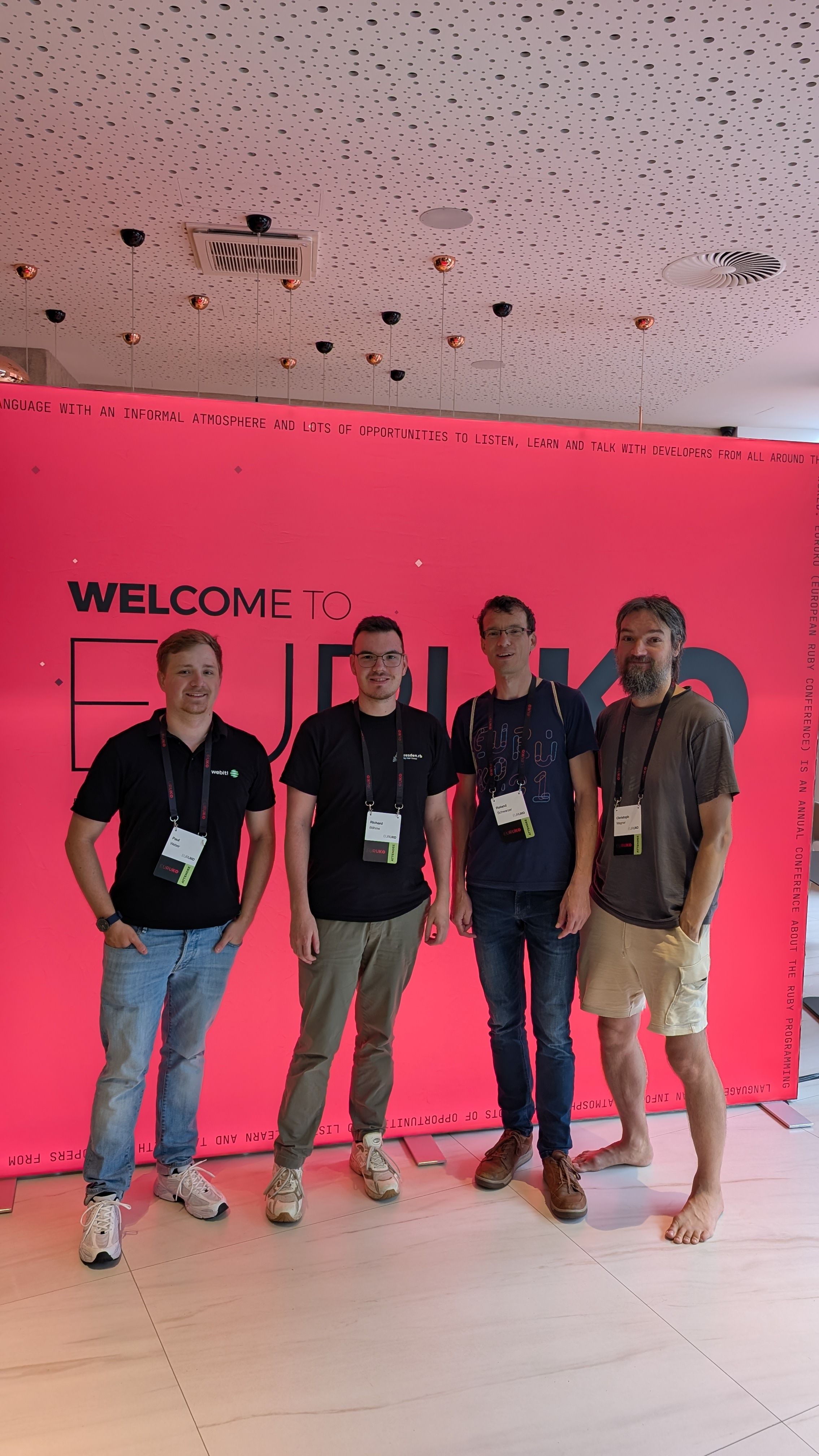
What sets EuRuKo apart is its strong links with the Ruby community. The atmosphere was friendly, and there were plenty of opportunities to discuss things with other developers during the breaks. We also had the chance to chat with the German Ruby community, discussing topics such as how to strengthen the exchange between local user groups and the potential for joint projects. Many of these conversations revealed that AI is generating a new wave of enthusiasm: ideas can be tested more quickly, it becomes easier to experiment with new technology, and the barrier to getting involved in open-source projects is lowered.
Summary
For our colleagues, EuRuKo 2026 offered two days of exploring new technical approaches, engaging in discussions, and generating ideas to reflect on and experiment with. EuRuKo 2026 demonstrated that Ruby remains highly relevant in the age of AI, with developments ranging from faster execution and more efficient deployment to production-ready AI integration. For our own projects, we aim to delve deeper into topics such as smaller, more frequent releases using feature flags and the increased use of AI functions via RubyLLM. We’re already looking forward to EuRuKo 2027 in Modena!
Share this post